Paperback · Kindle
Invocations and Prayers
A clear and accessible guide to working with Hekate through words, intention and steady spiritual practice.
Part of the Little Magical Guides collection.
Little Magical Guides · Book 1
Invocations and prayers for protection, guidance, clarity and inner strength. A practical devotional book for modern witches who feel called to Hekate’s power.
The Little Book of Hekate is designed for readers who want to work with Hekate’s energy in a direct, respectful and functional way. It gathers more than forty invocations and prayers for ritual work, meditation, protection and daily spiritual practice.
This is a book for those who seek clear words, focused intention and practical tools. It does not require complicated ceremonial work or prior experience. It offers a simple path into devotion, presence and spiritual strength.
Hekate is often approached as a goddess of crossroads, thresholds, protection, magic and transformation. This guide gives you ready-to-use prayers and invocations to support moments of fear, uncertainty, energetic heaviness or inner transition.
Use it beside your altar, before meditation, during ritual work or as a daily spiritual companion when you need clarity, grounding and direction.
A compact, focused and powerful collection of prayers and invocations created for real spiritual use.
This book is for you if you feel called to Hekate but want a simple place to begin.
The book gives you words you can actually use in ritual, meditation or quiet moments of spiritual focus.
The prayers are created for moments when you need strength, boundaries, courage and a clearer path forward.
No elaborate system is required. The practice begins with intention, respect and repetition.
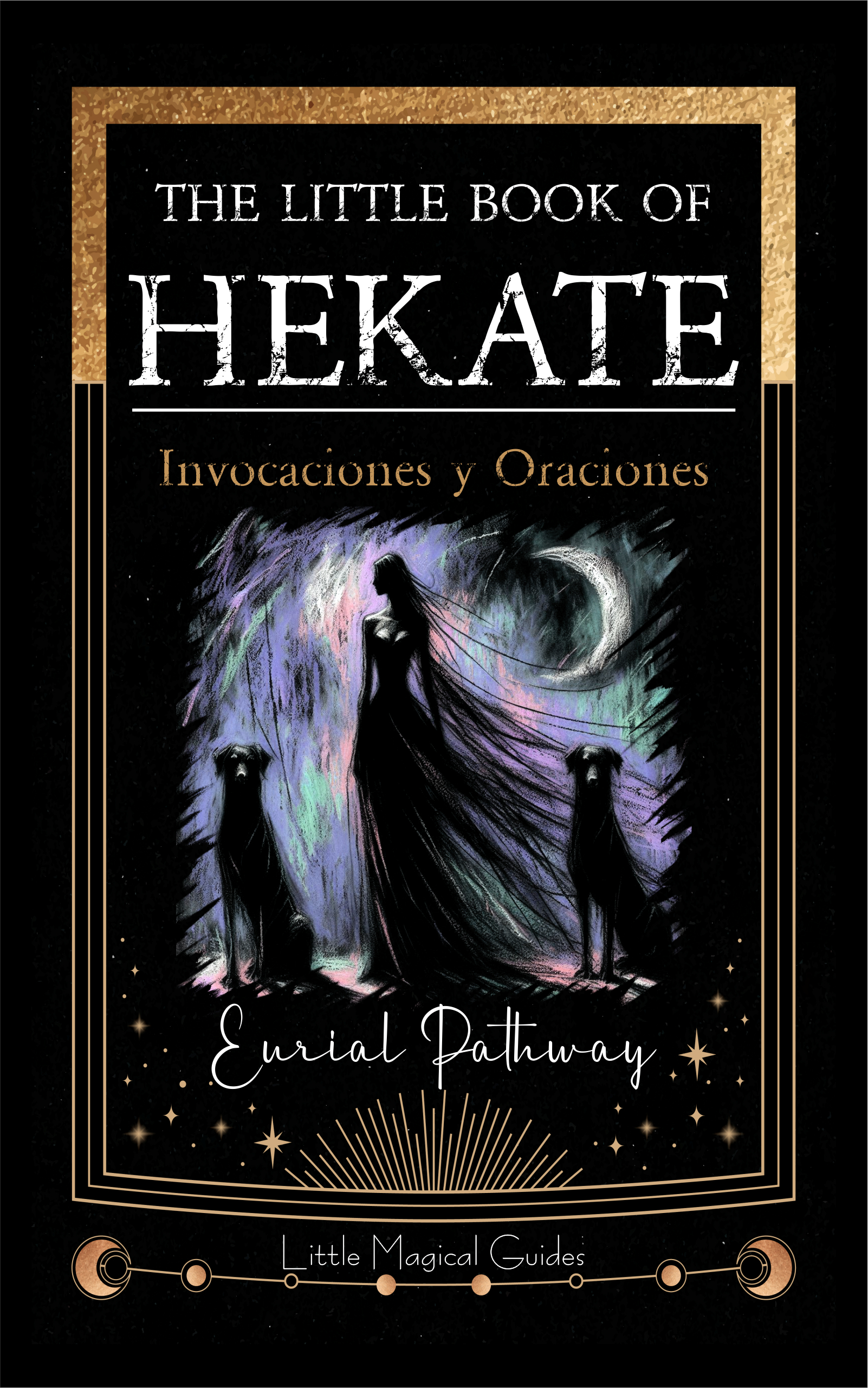
Title: The Little Book of Hekate: Invocations and Prayers
Series: Little Magical Guides · Book 1
Author: Eurial Pathway
Format: Paperback and Kindle
Language: English
Theme: Hekate, invocations, prayers, protection, spiritual guidance, dark goddess practice and modern witchcraft.
A small book with a focused purpose: to give you direct spiritual tools for working with Hekate.
The invocations are written to be easy to use, even if you are beginning your devotional or magical path.
Each prayer is made for use: before a candle, in front of an altar, during meditation, or in moments when you need spiritual support.
This guide belongs to a collection centered on practical tools inspired by Dark Goddesses and their transformative power.
A compact guide you can return to again and again, choosing the invocation that fits the moment.
Begin your work with Hekate through invocation, prayer and steady practice.
Common questions about the goddess Hekate, her invocations and devotional practice.
Hekate (also spelled Hecate) is an ancient Greek goddess of crossroads, magic, the moon and the threshold between worlds. She is one of the oldest deities in the Greek tradition, with possible pre-Greek Anatolian origins, and the first major literary reference to her appears in Hesiod's Theogony (c. 700 BCE), where she is honoured above all other gods by Zeus and described as a powerful goddess of earth, sea and starry heaven.
Hekate rules liminal spaces, the in-between places where one path ends and another begins. Three-way crossroads were considered especially sacred to her, which is why the Romans later called her Trivia, meaning "three roads." Symbolically, she presides over every threshold: between waking and sleep, life and death, the known and the unknown, decision and consequence.
Hekate is traditionally depicted with keys, torches, daggers and serpents, and is often shown with three faces or three bodies reflecting her dominion over earth, sea and sky. Black dogs are sacred to her, and the moon, especially the dark moon, is one of her central symbols. The key in particular represents her role as guardian of thresholds and gatekeeper of hidden knowledge.
Hekate is invoked through spoken prayer, ritual offerings and the lighting of candles or torches at an altar, doorway or crossroads. Modern devotional practice typically begins with preparing a clean space, focusing the intention, naming the goddess and her epithets, stating the request or dedication, and closing with gratitude. The structured invocations and prayers in The Little Book of Hekate are designed to make this practice accessible for daily ritual use.
Traditional offerings to Hekate include eggs, garlic, bread (especially barley bread), honey, fish and libations of wine, milk or honeyed water. These were historically left at crossroads or at a shrine by the front door on the night of the dark moon, a monthly observance known as Hekate's Deipnon. Incense such as frankincense, myrrh or bay, along with keys and black candles, are also common modern offerings.
Hekate is most strongly associated with the dark moon, the night before the new moon, which is when her ancient festival, the Deipnon, was observed. Many practitioners also work with her at night, at twilight or in moments of transition and decision. That said, Hekate can be invoked at any time; what matters most is presence, intention and consistency of practice.
Hekate is often described as a dark goddess because of her associations with the night, the underworld, magic and the restless dead. However, "dark" here refers to depth and liminality, not malevolence. In Hesiod's Theogony she is portrayed as a generous and protective goddess who grants honour, wealth and victory to those who pray to her. Her darkness is the threshold kind: where transformation and inner truth become possible.
No. This guide is written for readers who want a direct and accessible way to begin working with Hekate through invocations and prayers.
Yes. The prayers can be used in rituals, meditations, altar work or short moments of daily spiritual focus.
Yes. Hekate and Hecate are two common spellings used in English. Eurial Pathway uses Hekate as the main spelling for this devotional guide.
Discover more compact guides devoted to Dark Goddesses, invocations, prayers and practical magical work.
Six compact guides devoted to Dark Goddesses, invocations and practical ritual work.
Reading Path
A focused guide for readers who want practical magic, clear ritual structure and a direct path into The Little Book of Hekate.
Continue through the Eurial Pathway library with topics that connect this book to a wider magical practice.